








Most of us do not mind cleaning as much as we mind how fast a space gets messy again. The good news is that a clean home or workplace is less about perfection and more about simple habits that prevent chaos from piling up. If you are looking for tips and ideas, vprocleaningagency.com shows an organized approach that helps you clean in a planned way instead of just scrubbing randomly.
Why “Clean” Feels So Good (And Why It Slips So Fast)
A clean environment reduces friction in your day, even when you do not consciously notice it. When surfaces are clear and floors are crumb-free, you move faster, focus longer, and feel more in control.
The Real Goal: Reset, Not Perfection
Cleaning works best when you treat it as a reset button. You are restoring a baseline that makes life easier, not trying to create a showroom that nobody can live in.
The Mess Has Patterns
Most mess forms in the same places: entryways, kitchens, bathrooms, desks, and breakrooms. Once you identify your “hot spots,” you can spend time where it matters and stop over-cleaning areas that stay fine on their own.
Home Cleaning That Feels Manageable
Home cleaning is easiest when you split it into daily touch-ups and deeper weekly tasks. This keeps your space consistently comfortable without sacrificing an entire weekend.
The Daily Five-Minute Wins
Small routines beat big marathons. Pick a few quick actions that make the biggest visual difference.
- Wipe kitchen counters after meals
- Do a fast sweep in high-traffic areas
- Put dishes straight into the dishwasher or wash immediately
- Do a quick bathroom sink wipe after brushing your teeth
- Reset the living room before bed (pillows, cups, clutter)
Kitchen Cleaning Without Living in the Kitchen
The kitchen gets dirty because it is used constantly. Keep it simple: handle grease and crumbs early, and the deep cleaning becomes easier.
- Degrease the stovetop weekly
- Clean the microwave with steam (water bowl, a few minutes, then wipe)
- Wipe cabinet handles and appliance fronts, since hands touch them all day
- Empty the trash before it smells, not after
Bathrooms: The “Little And Often” Rule
Bathrooms feel gross quickly because moisture amplifies everything. A quick wipe-down routine prevents buildup.
- Squeegee shower walls a few times per week
- Use a mild bathroom spray on the sink and faucet daily or every other day
- Clean toilet touch points (handle and seat area) weekly
- Wash bath mats regularly to prevent musty odors
Office Cleaning That Supports Productivity
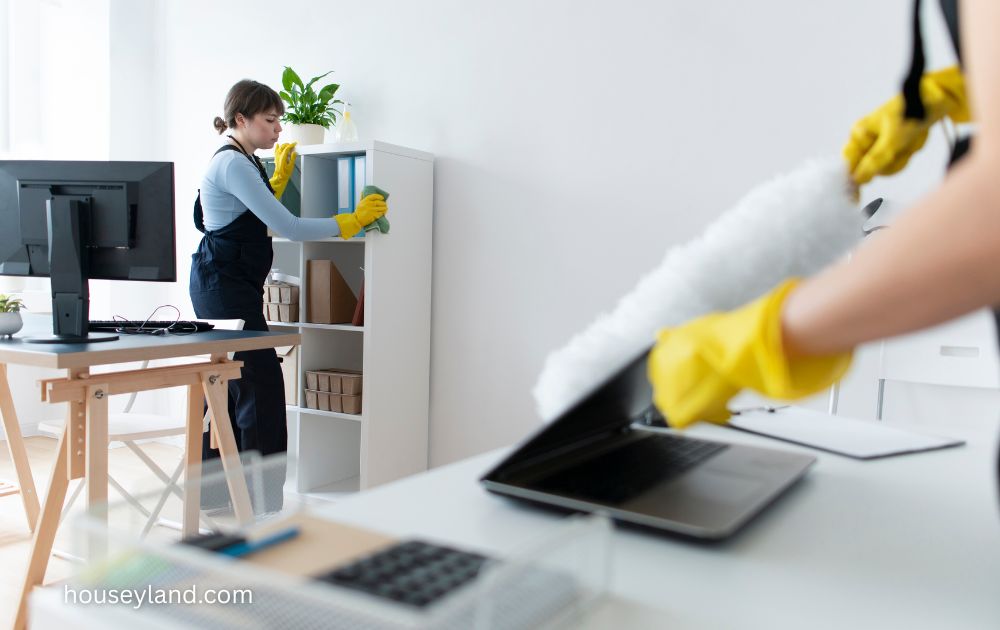
An office does not just need to look clean. It needs to stay hygienic, smell neutral, and support a steady flow of people without turning into a distraction.
High-Traffic Zones Need a Different Plan
Office cleaning should prioritize high-touch surfaces and shared areas first. This includes entry doors, reception counters, conference tables, and breakroom surfaces. When looking for professional help, companies like green apple commercial cleaning, bethesda, md show how a well-planned service can keep busy spaces clean and organized.
Desks and Personal Workspaces
Even in tidy offices, desks accumulate dust, fingerprints, and crumbs. Encourage employees to do a weekly desk reset, then align your deeper cleaning around it.
- Disinfect high-touch points (mouse, keyboard area, phone surface)
- Wipe monitors carefully with appropriate cloths
- Empty small desk bins so odors and fruit flies do not appear
- Keep wipes available so people can clean as they go
Breakrooms and Restrooms: Where Offices Win or Lose
A clean breakroom signals professionalism and respect for staff. A dirty one becomes a complaint magnet. Restrooms are similar, except the stakes are higher.
Focus on:
- Sink and faucet polishing
- Soap and paper supply checks
- Trash removal before overflow
- Floor spot cleaning daily if traffic is heavy
- Odor control through ventilation and regular drain checks
A Simple Cleaning Rhythm You Can Stick With
A plan that you actually follow beats an ambitious plan you abandon. Build a schedule that fits your life or your team’s workflow, then adjust based on what is realistically sustainable.
Weekly Structure That Works for Most People
Try assigning “themes” to days so decisions are automatic.
- One day for floors (vacuuming and mopping)
- One day for bathrooms
- One day for dusting and surfaces
- One day for laundry and linens
- One day for a rotating deep-clean task (baseboards, inside fridge, windows)
Monthly Deep Clean Without Burnout
Monthly deep cleaning is where you protect your space long-term. Keep the list short and rotate tasks.
Examples:
- Clean behind and under appliances
- Wash inside trash bins
- Wipe doors, frames, and light switches
- Vacuum upholstery and under cushions
- Clean vents and fan blades
Green Cleaning Without the Hype
Cleaning “green” is not about fancy labels. It is about choosing safer products, using them correctly, and improving air quality while you clean.
What Actually Makes a Difference
Start with ventilation, microfiber cloths, and correct dilution. Many harsh smells come from using too much product, not from the dirt itself.
Easy Swaps That Still Work
- Use fragrance-free or lightly scented cleaners where possible
- Choose hydrogen peroxide-based options for certain disinfecting needs
- Use baking soda for gentle scrubbing on sinks and tubs
- Use microfiber instead of paper towels for most surface wiping
Tip: Always test a new product on a small hidden spot, especially on natural stone, wood, or specialty finishes.
When Hiring Help Makes Sense
Sometimes the best cleaning strategy is knowing when not to do it yourself. Professional support can be practical, not indulgent.
Signs You Might Benefit From Pros
- Your schedule makes cleaning a constant stress point
- You need a move-in or move-out reset
- You want periodic deep cleaning to maintain a baseline
- Your office traffic is high enough that daily upkeep is not enough
How to Get Better Results With Any Service
Clear communication matters more than people expect. If you hire help, be specific about priorities: high-touch surfaces, pet hair, kitchen grease, restroom standards, or conference room presentation. A simple checklist and a quick walkthrough can prevent misunderstandings.
A Practical Room-By-Room Quick Checklist
This is not meant to be perfect. It is meant to be repeatable.
Living Areas
- Clear clutter from surfaces
- Dust top to bottom
- Vacuum rugs and under furniture edges
- Wipe remotes and door handles
Bedrooms
- Change sheets weekly or biweekly
- Dust nightstands and headboards
- Vacuum along baseboards
- Keep a laundry hamper where clothes actually land
Kitchens
- Wipe counters and sink daily
- Clean stovetop weekly
- Mop floors as needed
- Wipe handles and appliance fronts weekly
Bathrooms
- Wipe sink and mirror frequently
- Scrub shower and tub weekly
- Disinfect high-touch points
- Wash towels and mats regularly
Clean spaces are built through consistent resets, not occasional hero sessions. If you focus on the places that collect mess fastest, keep your routine realistic, and treat cleaning as part of how you support your day, your home and office will stay fresh without feeling like a second job.